Vinyl vs wood windows in 2026: what the certified specs say
By the ClearView editorial team · Sources read on 2026-10-15
Read time about 10 minutes
The short answer
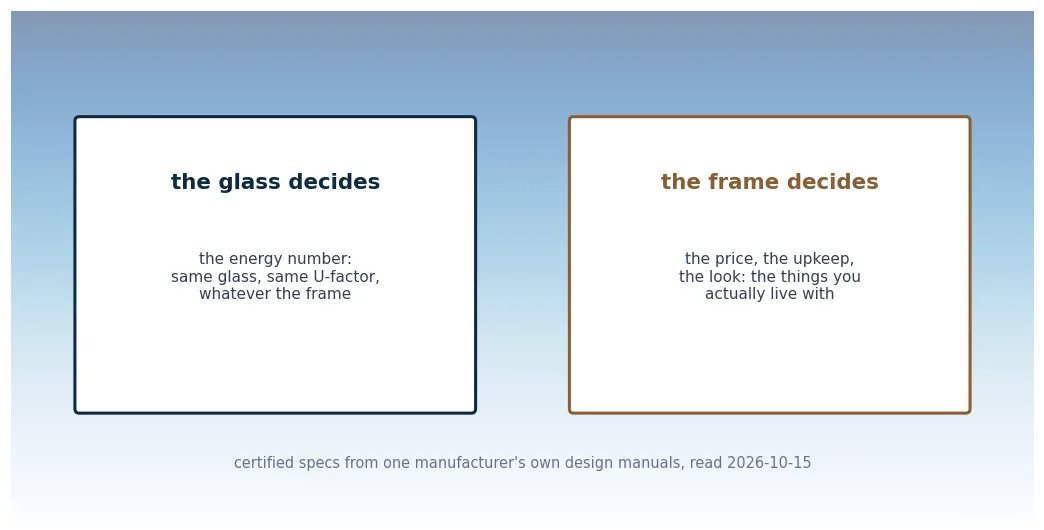
For most houses the answer is vinyl with a good glass package, and the reason is not the one the comparison pages give. We read one manufacturer's own certified design data for both materials: with the same glass, the vinyl window's U-factor lands inside the wood range. Energy is decided by the glass, not the frame. The frame decides the three things you live with: the price (vinyl is the budget tier), the upkeep (wood has a refinishing cycle, vinyl does not), and the interior look (the one contest vinyl loses). Choose on those three.
On this page (12 sections)
- The spec sheet nobody quotes
- How to read the label: U-factor and SHGC
- What the frame material actually decides
- Cost: the stable part of a moving price
- Maintenance over ten years
- Lifespan, honestly
- Looks and resale
- The third options: fiberglass, composite, clad
- Pros and cons, compressed
- Which one for your house
- What we read, and how
- FAQ
- Sources
The spec sheet nobody quotes
Every vinyl-versus-wood page has the same sentence: wood insulates better. None of them attach a number to it. Windows carry certified numbers: every rated window sold in the US has an NFRC label with a whole-unit U-factor, measured the same way for every brand. So we did the obvious thing nobody does: opened one manufacturer's architectural design manuals for both its vinyl and its wood lines, and compared the certified U-factors at the same glass packages.
Same glass, two frames, one number
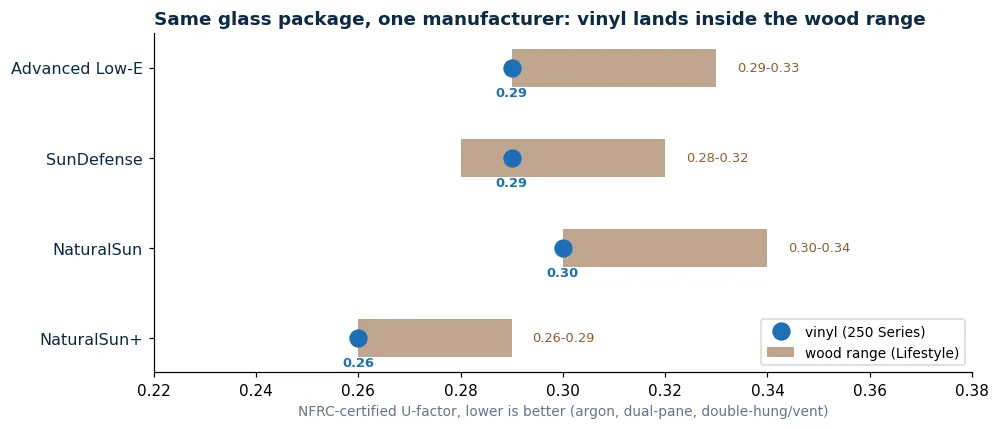
With the common Advanced Low-E argon package, the vinyl double-hung rates 0.29 and the wood vent unit rates 0.29 to 0.33. SunDefense: 0.29 against 0.28 to 0.32. NaturalSun: 0.30 against 0.30 to 0.34. The materials overlap so completely that picking between them on insulation is picking between two copies of the same window. These are not our measurements; they are the manufacturer's own NFRC-certified figures, read on 15 October 2026.
The ladder that actually moves the number
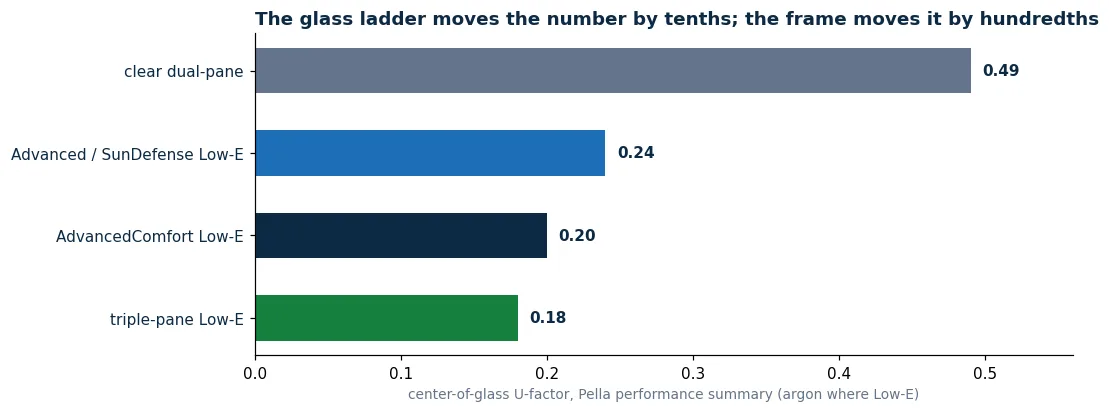
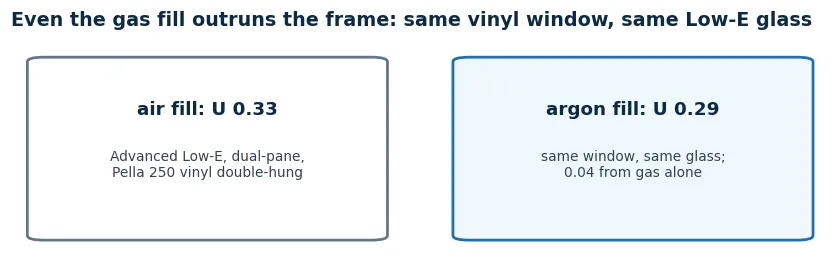
What does move U-factor is the glass itself. The manufacturer's center-of-glass ladder: clear dual-pane at 0.49, standard Low-E coatings at about 0.24, its comfort coating at 0.20, triple-pane Low-E at 0.18. The frame choice sits in the hundredths. The glass choice sits in the tenths. Even the gas fill outruns the frame: the same vinyl window with the same Low-E glass rates 0.33 on air and 0.29 on argon.
How to read the label: U-factor and SHGC
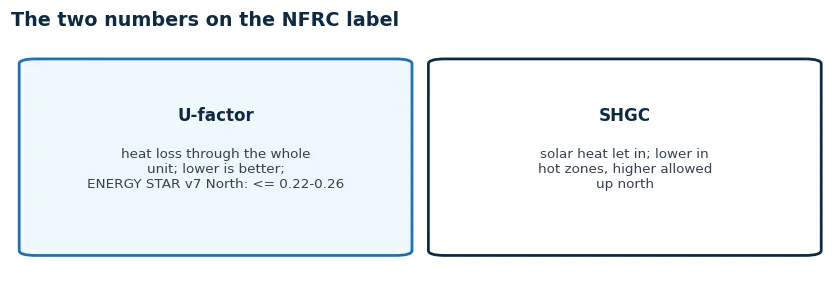
Two numbers on the NFRC label do all the work. U-factor measures heat loss through the whole unit; lower is better, and ENERGY STAR's 2023 Version 7 criteria set the bar by climate zone (tightest in the North). SHGC measures solar heat let in; hot climates want it low, northern ones may allow more. The label travels with the exact unit you buy, which is why a quote should name the glass package, not just the frame material.
Why whole-unit beats center-of-glass
The label rates the whole unit: glass, spacer, sash and frame together. A great glazing package in a leaky frame still reads badly, which is exactly why the label exists and why the same-glass comparison above is fair. When a salesman quotes center-of-glass numbers, the answer is the same either way: those favor the glass, not your room.
The climate-zone wrinkle
ENERGY STAR is zoned, so "efficient" is a different bar in Minnesota than in Texas. In the South the SHGC carries the savings; in the North the U-factor does. Neither number cares what the frame is made of. If drafts rather than ratings are what bother you, that diagnosis is its own page: the drafty windows guide.
What the frame material actually decides
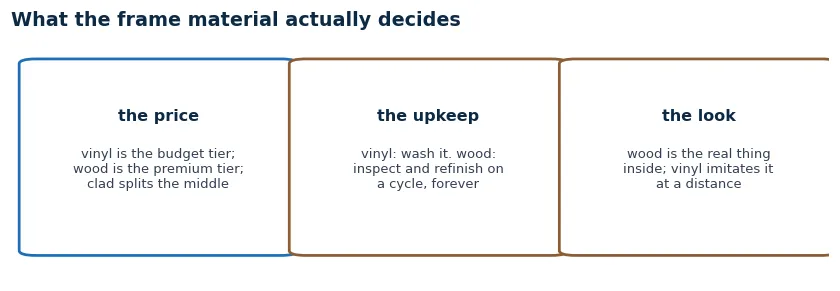
Once the energy tie is visible, the real decision clears up. The frame material decides three things, all of them about living with the window rather than measuring it.
Price: vinyl is the budget tier
Vinyl frames are extruded in volume and need no finish work, which is why they anchor the budget end of every manufacturer's catalog. Wood is the premium tier: milled lumber, joinery, finishing. Clad wood splits the difference. The sections below put the relationship in proportion.
Upkeep: the cycle only one material has
Vinyl's maintenance is a wash with soap. Wood's is a repeating calendar: inspect the exterior, repaint or restain on a multi-year cycle, watch the sills for the first softness. Done faithfully, that cycle is why old wood windows survive; skipped, it is why they fail.
Look: the contest vinyl loses
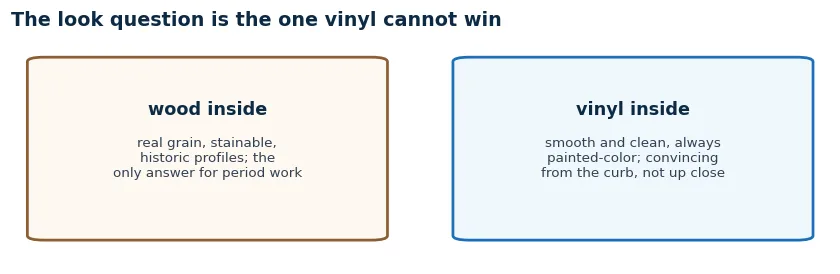
A wood interior is the real thing: grain, stain, period profiles. Vinyl is always its own smooth, colored surface, convincing from the curb and never up close. In historic districts the question is often settled for you: commissions commonly require wood or matching profiles.
Cost: the stable part of a moving price
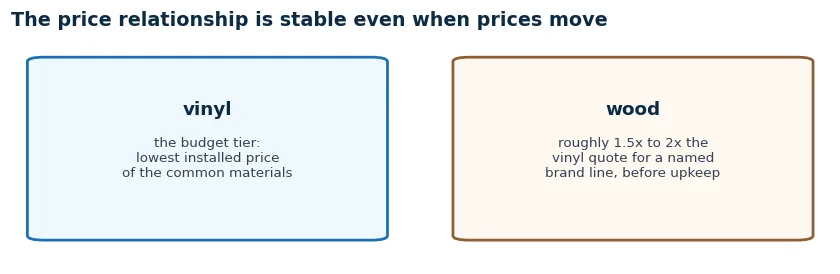
Window prices drift with brands and regions, but the relationship between the materials is stable: a named-brand wood line typically quotes around one and a half to two times the equivalent vinyl window, installed, before upkeep. Wood then adds its refinishing cycle as a running cost that vinyl never carries. The per-window arithmetic of a whole project, with measured labor hours, is on the installation cost page.
Where the premium goes
The wood premium buys the interior look, the historic fit, and repairability: a wood sash can be stripped and refinished; a vinyl one is replaced. What it does not buy, per the certified data above, is a better energy number.
Maintenance over ten years
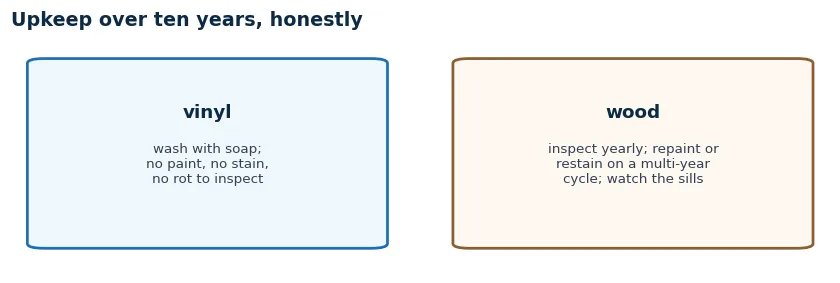
Add the calendars up. Ten years of vinyl ownership is ten rounds of soap and water. Ten years of wood ownership is the same cleaning plus two or three inspection-and-refinish rounds, each a ladder weekend or a painter's invoice. Neither is wrong; they are different subscriptions, and only one of them can be skipped without consequence.
The sills tell you first
Wood fails where water sits: bottom sills and lower joints. An awl test there, once a year, catches the beginning of rot while it is still a patch. The signal-reading version of that check, with the repair-versus-replace branch, is on the when to replace page.
Lifespan, honestly
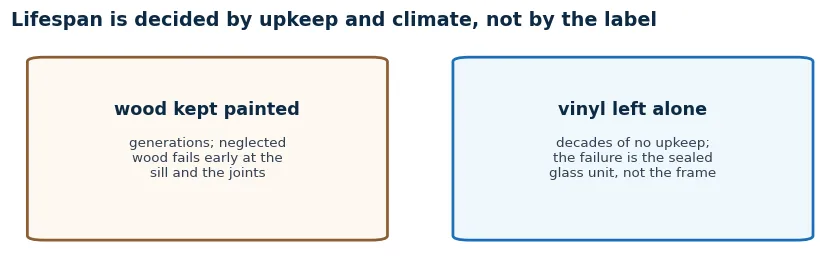
Both materials outlive their glass. Vinyl left alone runs for decades, and what fails first is the sealed unit, not the frame. Wood maintained on its cycle lasts generations; wood neglected fails early. The material on the label predicts less than the upkeep on the calendar and the climate on the wall. Measured failure rates by material and the warranty landscape are on the window lifespan page; this page's job is the choice, not the mortality table.
Looks and resale
This is wood's home turf and it is not close. A stained wood interior is the reference the vinyl industry keeps imitating with laminates and embossed grain. Where it matters, it matters completely: period architecture, historic commissions, high-design interiors. Where it does not, clean vinyl reads as maintained and nobody at the curb can tell.
What buyers actually read
At resale, condition outranks material: windows that open, lock and show clear glass read as a maintained house. In period neighborhoods, correct wood windows protect the premium; in most subdivisions, clean vinyl does the same job. Choose the material that fits the house, keep the receipts, and let the tests decide which openings need anything at all.
The third options: fiberglass, composite, clad
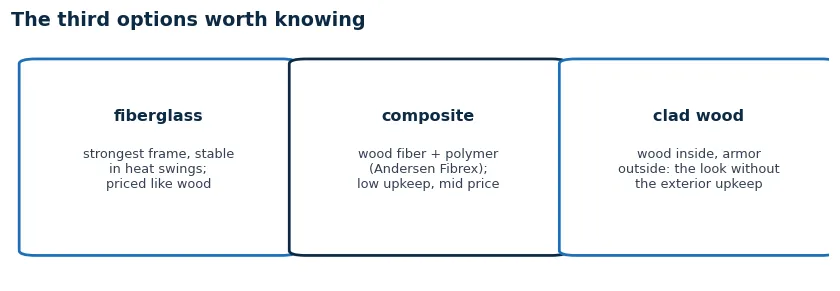
A third of the searches in this space are really asking whether the two-way choice can be dodged. It can, three ways. Fiberglass frames are the strongest and the most stable through heat swings, priced near wood. Composite frames (wood fiber bound in polymer, like Andersen's Fibrex) aim at low upkeep with a wood-adjacent feel at a mid price. And clad wood, vinyl or aluminum armor over a wood frame, keeps the wood interior and deletes the exterior upkeep, at a price between its parents.
Clad wood deserves its own sentence
The aluminum-clad and vinyl-clad lines exist precisely because of this page's finding: since the frame material does not move the energy number, you are free to buy the interior you want and armor the outside. Clad wood is what that freedom costs. It is the most common deliberate answer among people who read the specs first.
Pros and cons, compressed
For the skimmers and the screenshotters, the whole page in one table.
| Question | Vinyl | Wood |
|---|---|---|
| Energy (same glass) | U 0.29 in the audit pair | U 0.29 to 0.33: a tie |
| Installed price | the budget tier | about 1.5 to 2 times vinyl |
| Upkeep | wash it; never paint | inspect yearly; refinish on a cycle |
| Interior look | clean, smooth, imitation grain | the real thing; stainable |
| Lifespan | decades, no upkeep; glass fails first | generations if painted; fails if not |
| Historic fit | often refused by commissions | usually the required answer |
Which one for your house
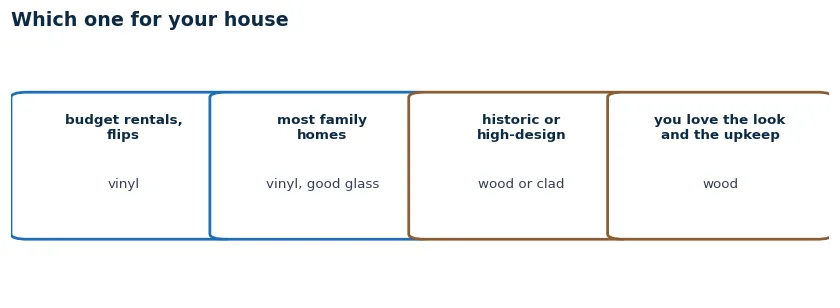
The question version of this page is the one Reddit asks every month, and with the specs settled the answer is short. Budget-sensitive replacements, rentals and most family homes: vinyl with a named Low-E argon package. Historic or design-led houses, and owners who want the wood interior on purpose: wood or clad wood, accepting the upkeep subscription. Everyone in between should price clad before settling.
The one line to bring to the quote
Whatever you choose, make the quote name the glass package and the NFRC whole-unit U-factor and SHGC for the exact unit. That habit is worth more than the frame decision, and it works on every window you will ever buy.
What we read, and how
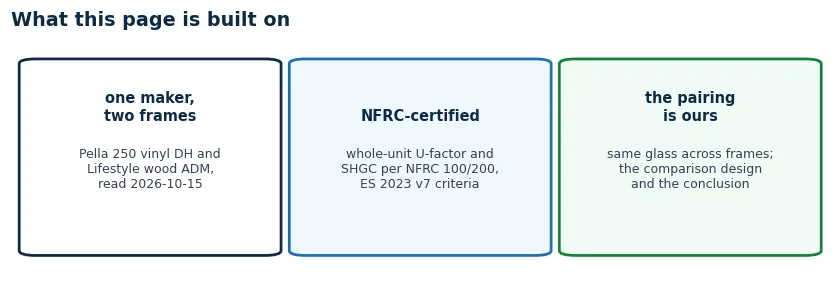
On 15 October 2026 we read the manufacturer's own architectural design manuals: the Pella 250 Series vinyl double-hung document (glazing performance table, NFRC-certified values, ENERGY STAR 2023 v7 criteria) and the Pella Lifestyle Series wood document, plus the company performance summary for the center-of-glass ladder. The pairing (same glass, both frames) and the conclusion drawn from it are ours.
The limits of this audit
One manufacturer, by design: a clean same-glass pair needs a single catalog. Other brands shift the absolute numbers, but the conclusion rests on the physics of whole-unit ratings, not on one company. Values are for NFRC standard sizes; your size and options move the specific figure, which is why the label on your quote is the version that governs.
The questions people actually ask
Are vinyl windows better than wood windows?
At the things that can be measured, they are equal more often than the marketing suggests: with the same glass package, the certified U-factor of a vinyl double-hung lands inside the wood range at the same manufacturer. Vinyl wins on price and upkeep; wood wins on interior look and historic fit. The honest answer is that the materials are better at different things, and the energy question is decided by the glass, not the frame.
Are wood windows more energy efficient than vinyl?
Not in the certified data. One manufacturer's own design manuals put a vinyl double-hung at U-factor 0.29 with a common Low-E argon package and the wood line at 0.29 to 0.33 with the same glass. The frame material moves the number by hundredths; the glass package moves it by tenths. Buy the glass first, then pick the frame for price, upkeep and looks.
How much cheaper is vinyl than wood?
The relationship is stable even as prices move: a named-brand wood line typically quotes roughly one and a half to two times the equivalent vinyl window installed, before upkeep. Wood then adds a refinishing cycle that vinyl never has. The exact numbers belong to your quote; the ratio between the materials is the durable part.
Do vinyl windows last as long as wood?
They last differently. Vinyl left alone runs for decades with no upkeep, and its usual failure is the sealed glass unit, not the frame. Wood kept painted can last generations; wood neglected fails early at the sill and joints. Lifespan tracks upkeep and climate more than material. The measured longevity side, with field failure data, is on our window lifespan page.
What about fiberglass or composite windows?
Both are the real third options. Fiberglass is the strongest, most dimensionally stable frame, priced near wood. Composite frames like Andersen's Fibrex blend wood fiber and polymer for low upkeep at a mid price. And clad wood puts armor over a wood exterior: the wood interior look without the exterior maintenance. If the vinyl-versus-wood choice feels like a compromise you dislike, it usually is.
Is vinyl-clad wood the best of both?
It is the honest middle: a real wood interior you can stain, a weatherproof exterior that never needs paint, and a price between the two parents. What it is not is cheap. For period houses and anyone who wants the wood look without the ladder work, it is the answer most often chosen on purpose.
Can you paint vinyl windows to look like wood?
Not convincingly, and often not safely for the warranty: many manufacturers void coverage if vinyl is painted, especially in dark colors that overheat the frame. If the wood look is the point, wood or a clad line is the honest route; vinyl's offer is that it never needs paint at all.
Which is better for resale, vinyl or wood?
Buyers read condition before material: clean, operating, fog-free windows of either material help a sale; failed ones hurt it. In period neighborhoods wood reads as correct and can support the premium; elsewhere clean vinyl reads as maintained. Replace what fails the tests, in the material that fits the house, and document it.
Sources
- Pella 250 Series vinyl double-hung: Architectural Design Manual (Rev. 02/2025) · the vinyl half of the audit: NFRC-certified U-factors by glass package.
- Pella Lifestyle Series (wood): product overview and glazing performance · the wood half, same glass packages, argon dual-pane.
- ENERGY STAR: windows, doors and skylights · the 2023 v7 climate-zone criteria referenced throughout.
- NFRC: the National Fenestration Rating Council · whose label makes the same-glass comparison possible.
- US DOE FEMP: purchasing energy-efficient residential windows · the federal purchasing guidance for the numbers that matter.
- Wikipedia: insulated glazing · the construction of the glass packages the ladder measures.
- EPA: Lead Renovation, Repair and Painting program · pre-1978 houses add the lead-safe layer to any window work.
- USA.gov: repairing your home · the federal doorway for doing work like this safely.
Certified values are for NFRC standard sizes; the label on your quoted unit governs. ClearView is an independent guide, not a seller or installer; see the disclaimer.
The price side of the same choice
Once the material is picked, the project questions are what it costs and how long the work takes. Those are on the installation cost page and the replacement process page, with measured hours and weeks.