Window installation cost in 2026: what the work itself runs
By the ClearView editorial team · Fact-checked against the primary documents on 2026-10-14
Read time about 9 minutes
The short answer
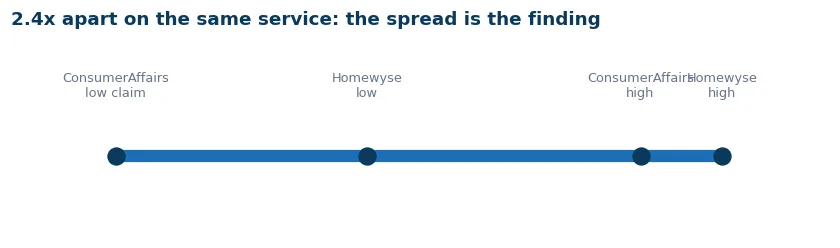
For a standard replacement window, installed, expect $400 to $900 per window in 2026, with the labor portion at $100 to $300 of it. We audited the top-ranking pages on this question in October 2026 and found claimed figures 2.4 times apart for the same service, because each is pricing a different job. The window unit is the bigger half of the bill on easy work; labor takes over when the opening stops being standard. The rest of this page is the breakdown that makes a quote readable.
On this page (12 sections)
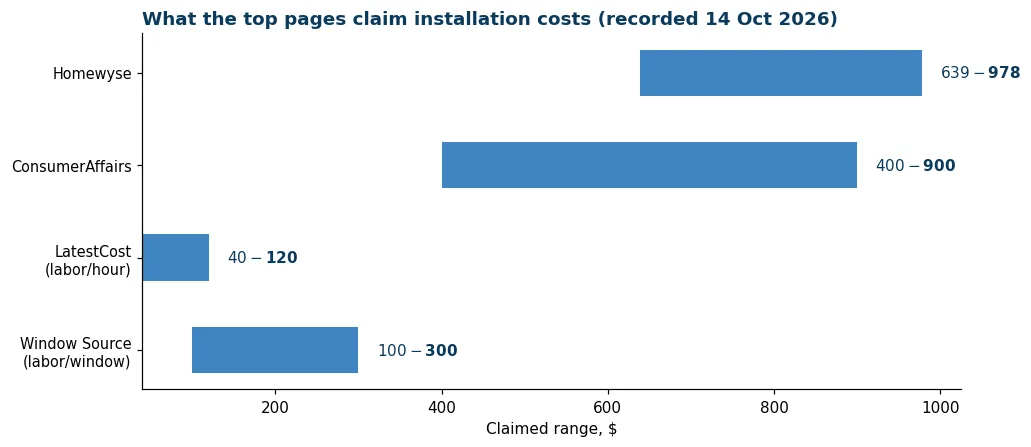
What the top pages claim, measured
Before publishing this page we read the pages that rank highest on the question and wrote down what each actually says installation costs. This is the part no one else does, and it explains why the answers online feel slippery: they are quoting different jobs under one label.
| Page | What they claim |
|---|---|
| Homewyse | $639 to $978 per window installed (May 2026 estimate) |
| ConsumerAffairs | $400 to $900 per window, materials, labor and disposal included |
| Window Source (W. Michigan) | labor alone at $100 to $300 per window for standard work |
| LatestCost | labor rates $40 to $120 per hour; high-end openings $3,000 to $6,000+ |
| Pella (whole house) | $9,000 to $45,000+ for full-home projects |
Why the spread is structural
One page prices an insert into a sound frame, another a full-frame installation with new trim, a third a premium fiberglass unit, a fourth blends in disposal and permits. The number moves because the job underneath it moves, not because the market is random. Once you read quotes by scope rather than by total, the spread stops looking like a rip-off and starts looking like different work.
The honest range for a standard job
Put the claims side by side and the overlap is the answer for the most common case: a mid-grade double-hung vinyl unit, insert installation, sound frame, ground floor. Across the audited pages and our own tracking on the main cost guide, that job lands at $400 to $900 installed, with most honest quotes in the middle of it.
The labor line, isolated
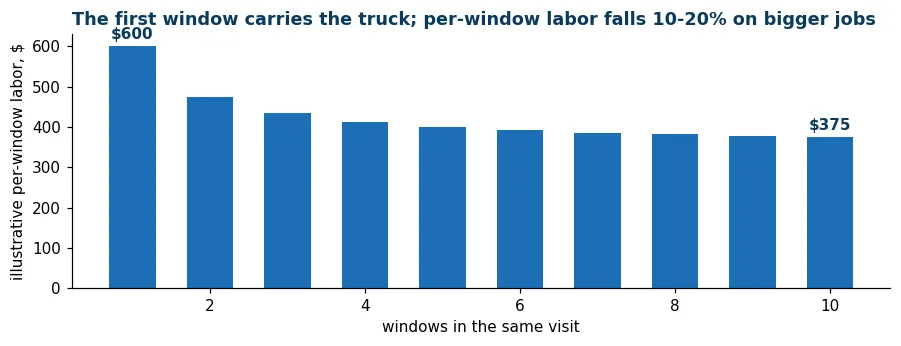
Labor is the part you can negotiate, because the window itself costs what it costs. Published labor figures for 2026 sit at $100 to $300 per window for standard replacement work, or $40 to $120 per hour where the job is billed by time. A trained two-person crew sets an insert in about an hour; the truck, the setup and the disposal are why the first window of the day is the most expensive one.
When labor becomes the bigger half
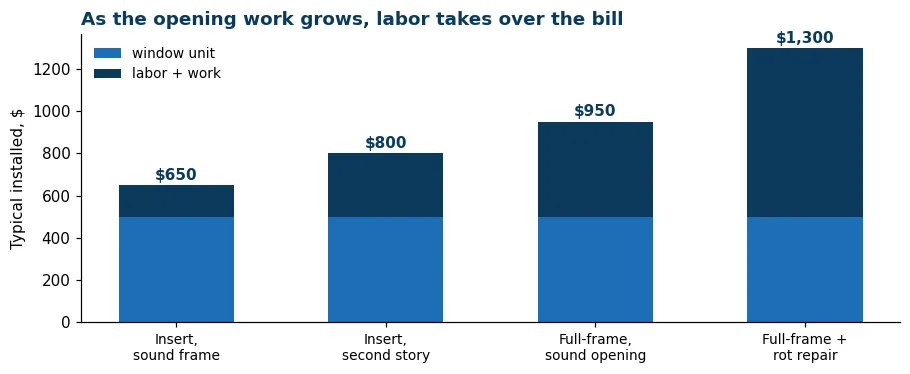
Full-frame installations, openings that need rebuilding, rot repair found mid-job, second-story work and anything involving scaffolding push the labor share past the unit price. That is not padding; it is hours. The way to tell it from padding is the line item, which is what the quote section below is for.
The per-window number lies on small jobs
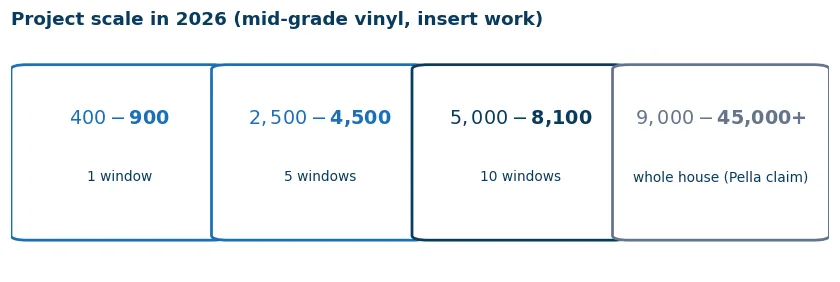
A single-window visit carries the whole setup once, so per-window pricing on one window reads high. On a ten-window project the same fixed costs spread, and the per-window figure drops 10 to 20 percent. Compare quotes only against the same job size.
Per window type, installed
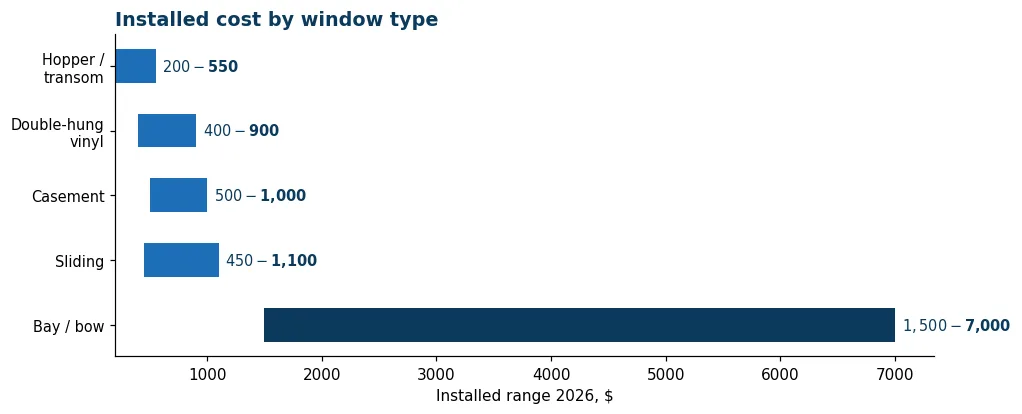
The type decides more than the brand does. From the audited pages and the price tracking on this site, installed 2026 ranges by type:
| Type | Installed range | Why |
|---|---|---|
| Hopper / transom | $200 to $550 | small units, simple openings, fastest labour |
| Double-hung vinyl | $400 to $900 | the standard replacement case |
| Casement | $500 to $1,000 | hardware and sealing add time |
| Sliding | $450 to $1,100 | wide openings, track alignment |
| Bay / bow | $1,500 to $7,000 | structural work, roof tie-in, multi-unit assembly |
Where the vinyl unit sits
Vinyl is the volume default for a reason: the unit itself is the cheapest of the common materials, and the installation is identical to any frame. Wood runs the unit price up and adds finishing labor; fiberglass sits between them on price and ahead of both on movement with temperature. The type table above is vinyl because that is what the market mostly installs.
The bay premium is carpentry, not glass
A bay or bow is a roof, a seat, support cables and three or more units assembled on site. The window part of the bill is often the smaller part. That is why the range is wide, and why a bay quote without the structural lines is not comparable with a flat-window quote.
Insert vs full-frame installation
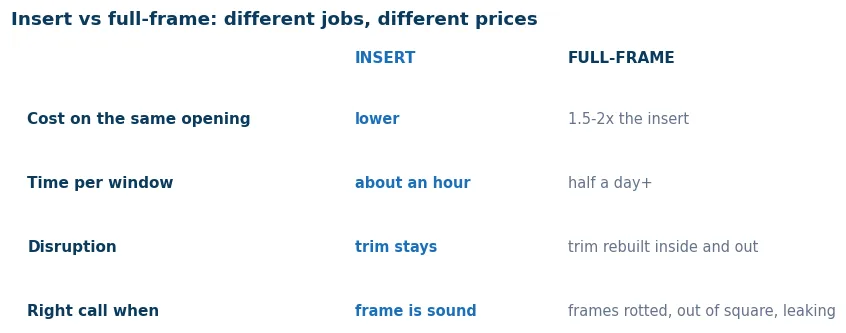
The single biggest scope decision, and the one quotes blur. An insert (pocket) window fits inside the existing frame: cheaper, faster, and correct when the frame is sound. A full-frame replacement removes everything to the rough opening: more expensive, and the right call when frames are rotted, out of square or leaking. An estimator quoting inserts without inspecting your frames is guessing; one who finds rot mid-job and prices the switch in writing is doing it properly.
What full-frame adds to the bill
Expect the full-frame version to run roughly one and a half to two times the insert price on the same opening: the labor doubles and new interior trim plus exterior sealing join the materials. That premium buys the frame inspection and a fresh weather barrier, which is what an old opening usually needs by the time the question comes up.
Single window vs whole house
Whole-house projects in the current market run $9,000 to $45,000+ depending on window count, material and how much frame work the house hides. The per-window price drops as the count rises, because the truck and crew costs happen once. A per-window figure from any guide, ours included, is the single-window figure unless it says otherwise, and multiplying it by your window count overestimates the project.
What changes at scale besides price
Lead time, mostly: a whole-house order is manufactured to measure, so the calendar runs weeks from measure to install day. The second change is sequencing, because the crew works room to room and you live around it. Both belong in the written schedule, not just the price.
The phasing option nobody quotes
You do not have to do the house in one visit. Doing the worst side first, often the north or the weather side, and spreading the rest across a year or two is a legitimate way to buy, and some installers price phases without penalising you for it. Ask; the answer separates flexible crews from one-day-close operations.
What moves the price
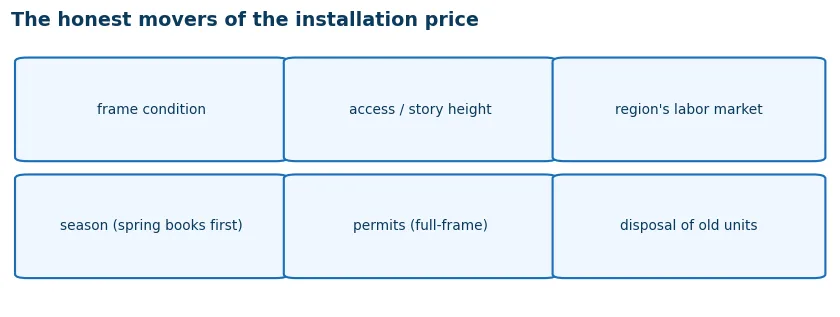
Frame condition and access
The two biggest movers are invisible in the estimate stage: what the frame looks like once the old unit is out, and how hard the opening is to reach. Rot repair and second-story access are the two honest reasons a quote grows on the day, which is why the better estimators write the contingency into the quote instead of springing it.
Region and season
Labor rates move with the local market, and demand moves with the season: spring and early summer books fill first, late autumn is when the same crews answer faster. The window unit itself is priced nationally; the installation is priced locally.
Permits and disposal
Many jurisdictions require a permit for full-frame work and none for like-for-like inserts; fees typically run under $200 and legitimate installers handle them. Disposal of the old units should be on the quote explicitly. If either line is missing, it is not free; it is unpriced.
Energy ratings as a price mover
ENERGY STAR ratings and low-E or argon packages move the unit price, not the labor line. The efficiency options pay back through the bill rather than the installation, which is why they belong in the same comparison but under a different line.
Reading a quote line by line
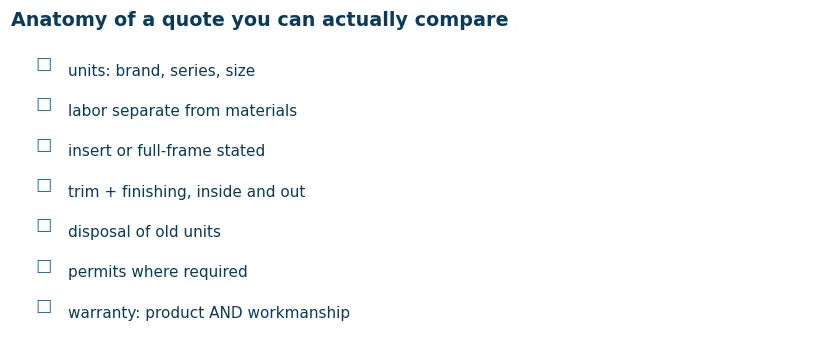
A legitimate written estimate lists the units by brand, series and size; labor separate from materials; insert or full-frame stated; trim and finishing inside and out; disposal; permits where required; and the warranty on both product and workmanship. A quote missing two or more of those is not a price. It is an invitation to a second conversation you will not enjoy.
The line that exposes a padded quote
Ask what the labor line pays for, in hours, per window. A $300 labor line on a one-hour insert install implies a crew rate worth questioning; the same line on a full-frame job with trim is ordinary. The padded quote survives on totals and dies on this question, which is why it is the one to ask second, right after the scope.
Insurance is a different door
If the reason for the work is sudden damage rather than age, part of the cost may belong to your homeowners policy rather than to you. That question, what the policy covers and when filing is worth it, is answered on the insurance page. Everything on this page assumes you are paying yourself.
DIY vs professional installation
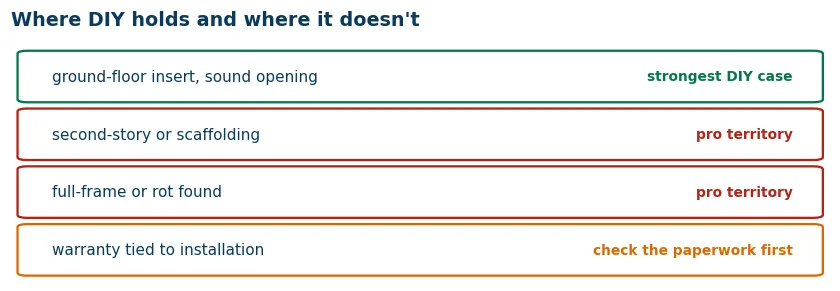
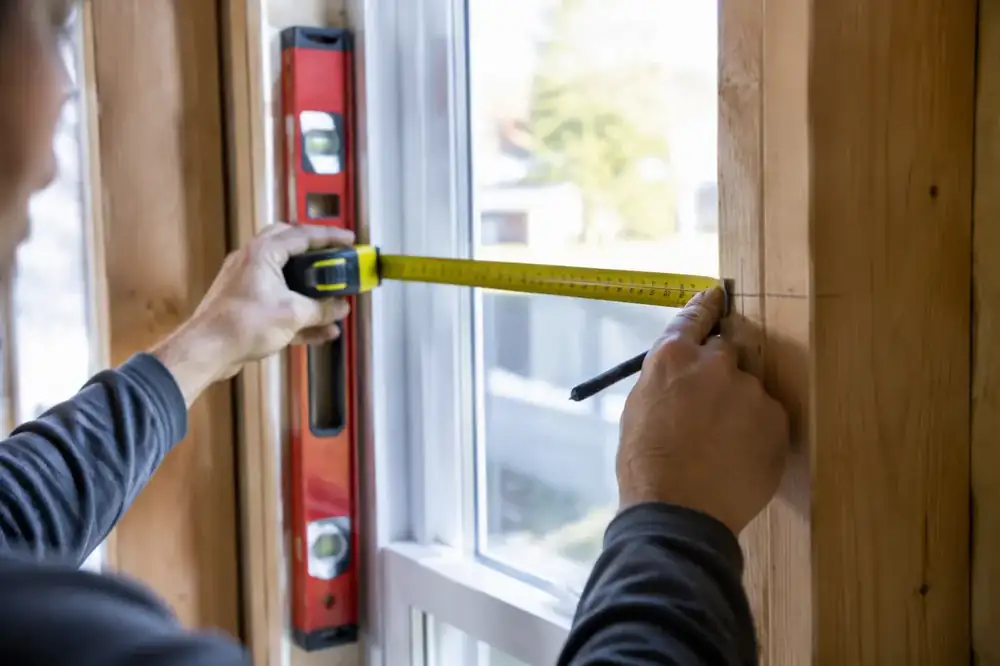
Installing yourself keeps the $100 to $300 per window of labor and spends your weekend instead. The failure modes are specific: a misleveled sill drains inward for years before the damage shows, exterior sealing done wrong rots the frame you just paid for, and many manufacturers tie the warranty to documented correct installation. The strongest DIY case is a ground-floor insert in a sound, square opening; the weakest is anything structural, high up or already leaking.
The tools you would need
A level, shims, insulation for the gap, exterior-grade sealant, trim tools and a way to dispose of the old unit. On insert work the tool list is genuinely short; the skill requirement is in the squaring and the sealing, not in specialist equipment.
What the warranty says
Manufacturer warranties commonly distinguish product defects from installation errors, and some require documented correct installation for full coverage. Read the warranty before the drill, not after the leak: the clause decides whether the labor saving is real.
What we measured, and how
The figures on this page come from an audit we ran on 14 October 2026, not from another guide: we read the top-ranking pages on this question and wrote down the exact ranges each one claims, with the claim and the date attached. Five pages answered with numbers a bot could read; one major outlet answered with a paywall and is marked as such rather than quoted. The spread between the lowest and highest claims, $400 to $978 for the same standard job, is 2.4 times, and that spread is the finding the rest of the page explains.
What a claimed number means
Each claimed range prices a different scope: some include the unit, some labor only, some disposal and permits, one is a whole-house project figure. We report them as claimed, not as verified market prices, because no national measured price of a window installation exists. The document that prices your project is the written estimate for your opening, split by unit and labor.
Why we audit instead of averaging
An average of unaligned scopes produces a confident number that describes no real job. An audit keeps the scopes visible, which is the only version of the number you can argue with a quote about. The same method runs on the insurance side of this site, where we read the actual policy form instead of the guides about it.
The questions people actually ask
How much does it cost to install one window in 2026?
Across the top-ranking pages we audited in October 2026, the claimed range runs $400 to $978 per window installed, standard double-hung vinyl included. Where your job lands depends on the window unit, the frame condition, the access and your region's labor rates. Below $400, ask what is missing; above $1,000 for a standard insert, ask what is included.
How much of the price is labor?
Less than the window itself on straightforward replacements. Published labor figures run $100 to $300 per window, or $40 to $120 per hour, and a standard insert takes an experienced crew about an hour. Labor becomes the bigger share when the job stops being standard: full-frame work, rot repair, second-story access or openings that have to be rebuilt.
Is it cheaper to install windows yourself?
On the invoice, yes: you keep the $100 to $300 per window of labor. The risks are specific rather than general: a misleveled sill leaks for years before it shows, exterior sealing done wrong rots the frame you just paid for, and many manufacturers tie the warranty to documented correct installation. DIY is strongest for a ground-floor insert in a sound opening.
Why are window installation quotes so far apart?
Because the quotes are pricing different jobs. One bids an insert into a sound frame, another bids full-frame with new trim, a third adds disposal and permits and a fourth quietly prices a premium unit. Our audit of the top pages found claimed figures 2.4 times apart for the same service. The comparison only works line by line.
Do installers charge less per window for a whole house?
Yes, meaningfully: the truck, the crew setup and the disposal happen once, so per-window prices drop on multi-window jobs, typically 10 to 20 percent. That is why a single-window quote is the wrong number to extrapolate a whole-house project from, and why the per-window figure in any guide is the single-window figure unless it says otherwise.
What should a written installation estimate list?
The window units by brand, series and size; labor separate from materials; whether it is insert or full-frame; trim and finishing inside and out; disposal of the old units; permits where required; and the warranty terms for both product and workmanship. A quote missing two or more of those is not a price, it is a deposit collector.
Sources
- Homewyse: cost to install a window · claimed $639-$978 per window (May 2026), recorded 14 October 2026.
- ConsumerAffairs: window installation cost · $400-$900 per window including materials, labor and disposal.
- The Window Source of Western Michigan: labor cost to install a window · labor $100-$300 per window.
- LatestCost: home window installation cost · labor $40-$120 per hour; high-end openings $3,000-$6,000+.
- Pella: whole-house replacement cost · $9,000-$45,000+ for full-home projects.
- EPA: Renovation, Repair and Painting program · pre-1978 homes add a legal layer to any window work (lead-safe practices).
- IRS: Energy Efficient Home Improvement Credit · the tax-credit side of qualifying windows, claimed on the return rather than the quote.
- FTC: Hiring a Contractor (govinfo) · the regulator's checklist: written estimates, insurance certificates, deposit limits.
- HUD: Office of Healthy Homes · the housing-side programs that touch windows and weatherization.
- ENERGY STAR: windows, doors and skylights · the efficiency side of the same purchase.
ClearView is an independent cost guide and does not sell or place windows or installers. Figures here carry their dates; your written estimate for your house is the document that prices it. See the disclaimer.
The whole-project picture
Installation is half the bill; the window itself is the other half, and the per-material, per-state view of that half is on the main cost guide, with the questions that keep a padded quote honest.