Does home insurance cover window replacement?
Published 2026-10-14 · Read time about 9 minutes
The short answer
Yes when the cause is sudden and accidental: hail, windstorm, vandalism, a falling tree limb, a vehicle impact, fire. No when the cause is age: rot, wear, a fogged seal, a slow leak that got worse over the years. The deciding document is not the adjuster's opinion but the policy form itself, and most American homes carry the same one. Below we read it line by line.
On this page (11 sections)
- How a policy actually looks at a window
- Covered: the scenarios that pay
- Not covered: where window claims die
- The deductible math on one window
- Replacement cost vs actual cash value
- Filing the claim in the right order
- If the claim is denied
- Special cases: fogged seals, rentals, condos, vacant homes
- What we verified in the policy documents
- FAQ
- Sources
How a policy actually looks at a window
There is no line in your policy that says "windows." A window is part of the dwelling, and the dwelling rules decide. That single fact explains every answer that follows.
The dwelling side is open-perils
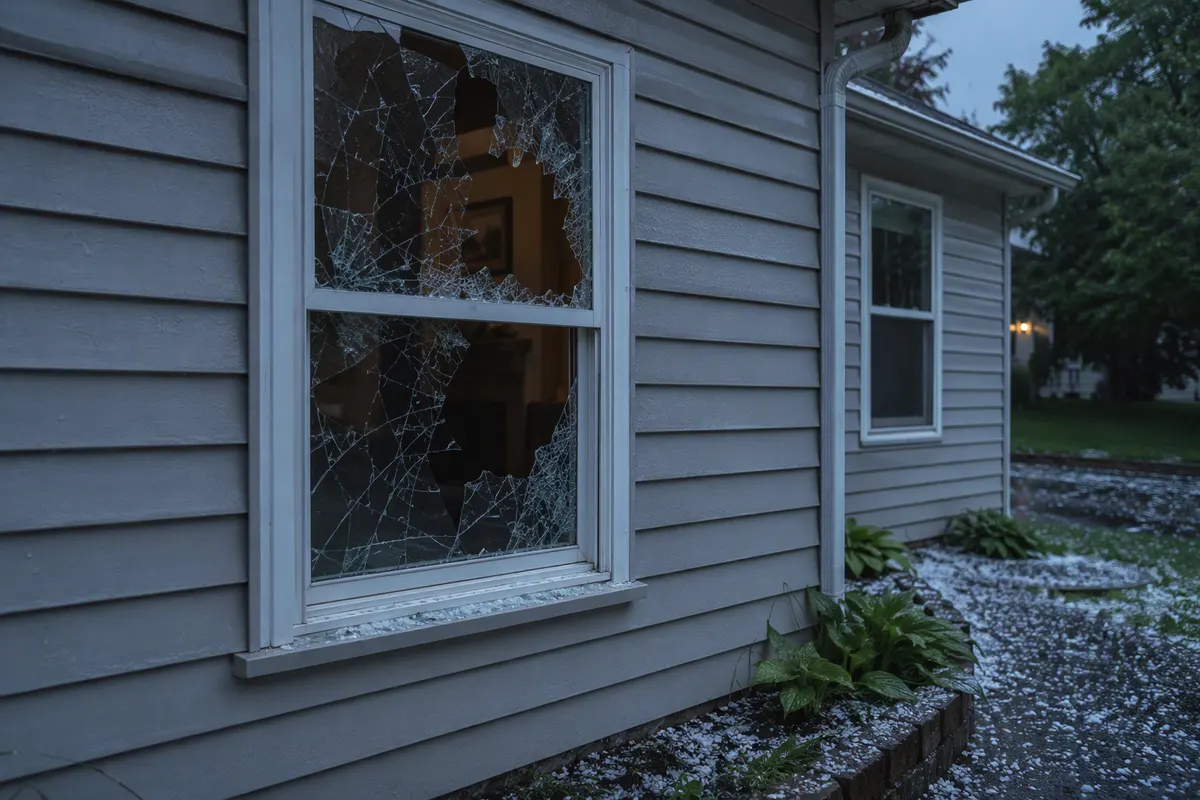
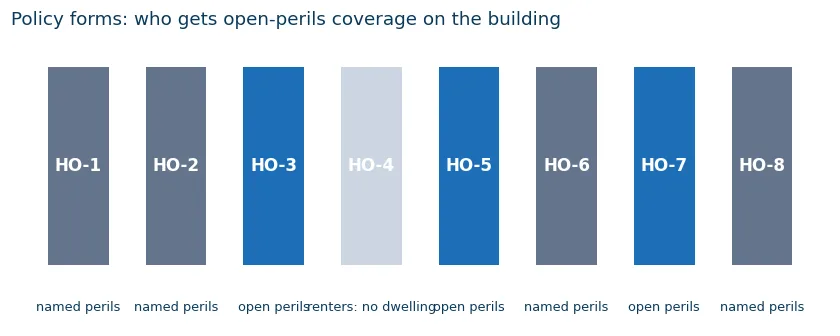
The standard American homeowners policy is the HO-3 special form. On the building itself it pays for, in the words of the State Farm form we read for this page, "accidental direct physical loss" unless the cause is excluded. That is open-perils coverage: the insurer has to point at an exclusion to deny, not the other way around. A window smashed by a tree limb is an accidental direct physical loss to the dwelling, so it starts from covered and works backward only if an exclusion fits.
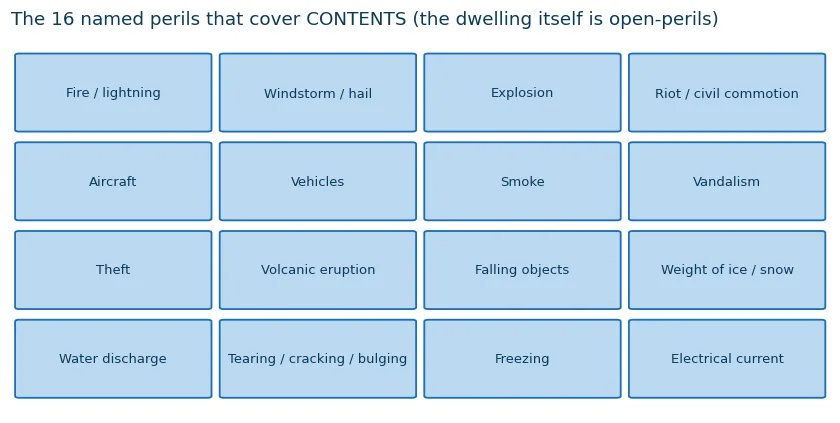
The contents side is named-perils
Your belongings are covered only against the 16 perils the form lists. The distinction matters for windows mainly at the edges: curtains or a laptop ruined by the rain that came through the broken pane are contents, and the cause has to be on the list. Windstorm is on it, so storm rain through a storm-broken window qualifies; a slow leak you ignored does not.
Where glass sits in the form
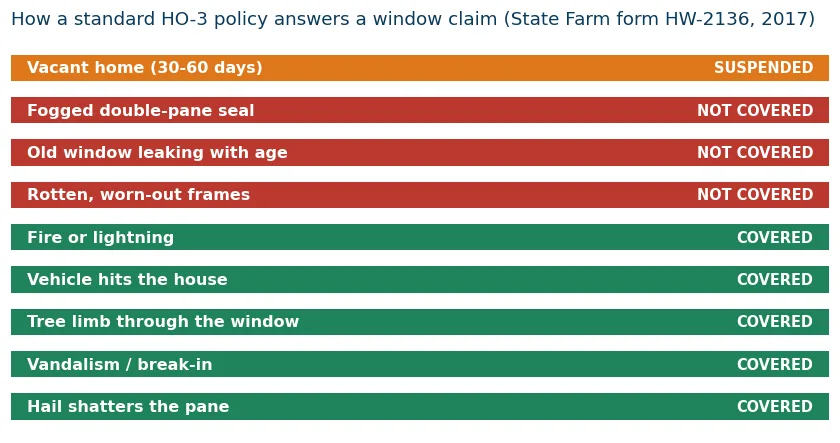
Glass gets its own mentions. The State Farm form pays for "the breakage of glass or safety glazing material that is a part of a building structure" in its additional coverages, and then takes glass away again in specific situations, vacancy being the big one. The form is public through the Oklahoma Insurance Department, and we quote it below rather than paraphrase an insurer's marketing page.
Covered: the scenarios that pay
Storm and hail
Windstorm and hail are named perils even on the strictest forms, and hail that shatters a pane is the textbook covered window claim. Allstate's own consumer page says the same thing from the other side of the counter: dwelling coverage may come into play "depending on what caused the window to break," with hail as their example. One caveat with teeth: in hurricane states the wind deductible is often a percentage of the dwelling coverage, and that changes the math below.
Vandalism and break-ins
A window smashed by a vandal or a burglar is covered, with two conditions worth knowing. The form expects a police report for criminal acts, and the coverage for vandalism and glass evaporates once the home counts as vacant. More on that clock in the special cases section.
Falling objects and vehicle impacts
A limb through the pane in a storm, a baseball through the sash, a car that leaves the road and meets the front wall: all are named perils or open-perils losses on the dwelling. If a neighbor's tree does the damage, your own policy usually still pays you and then argues with the neighbor's insurer afterward, which is their problem, not yours.
Fire
Fire and lightning sit at the top of every perils list, and windows lost to heat, flame or the fire department's ventilation work are part of the fire loss, not a separate claim.
Not covered: where window claims die
Wear, rot and age
The exclusion that kills most window claims is five words long: "mechanical breakdown, wear and tear, or gradual deterioration." Rotted sills, frames that gave up after forty winters, glazing putty that crumbled over a decade. Insurance is priced for sudden events, and slow failure is the homeowner's maintenance budget. This is also why the answer to replacing all your windows at once is almost always no, and why energy upgrades live in a different bucket entirely (tax credits, not claims).
The fogged double-pane
A failed insulated-glass seal, the milky fog between the panes, is a manufacturing or aging defect in the eyes of the form. It is gradual, it is not an accident, and it is not covered. Some window manufacturers carry 10 to 20 year seal warranties, which is where that claim actually lives.
Slow leaks
A window that has leaked a little every rain for two years produces rot and mold, and both sit on the exclusion side: the water was not sudden, and the resulting decay is gradual. The query "does homeowners insurance cover leaking windows" has the same answer in every guide that checked the form: leaking from age is maintenance. A window that leaks tonight because a branch just opened the frame is a different claim, because the cause is tonight's branch.
The vacancy clause
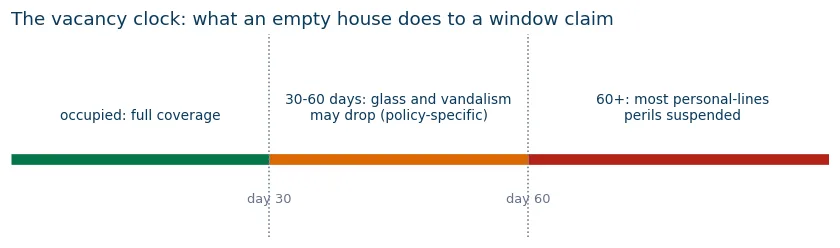
Empty houses attract broken windows, and insurers know it. The State Farm form excludes vandalism, theft and glass breakage "if the dwelling is a vacant dwelling," and the vacancy definition typically bites at 30 to 60 days. Renovations, estate sales and gap periods between tenants are where this clause earns its keep.
The deductible math on one window
Covered is not the same as worth claiming. A standard double-hung replacement runs $450 to $1,400 installed in 2026, the range we track on the main cost guide. Against that number sits your deductible.
Flat deductibles eat small claims
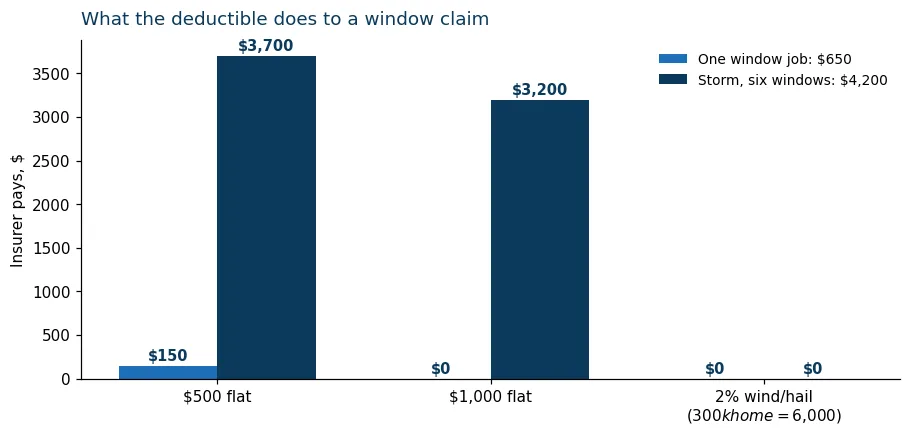
With a $500 deductible, a $650 window job returns $150 before any premium consequences. With a $1,000 deductible it returns nothing at all. A claim that small still goes on the record, and a claim-free discount is typically worth more than the payout.
Percentage deductibles in storm states
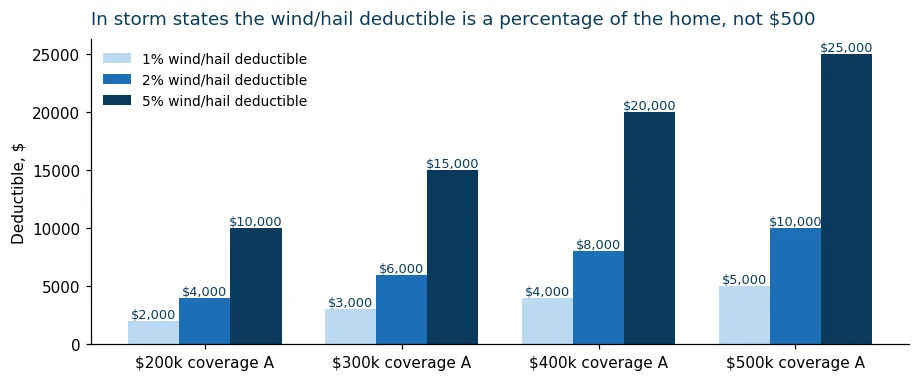
In hurricane and hail country the wind deductible is usually 1 to 5 percent of the dwelling coverage. On a home insured for $300,000 that is $3,000 to $15,000 out of pocket before the insurer pays anything. One broken window never clears that bar; a whole side of the house often does.
| Deductible | One window, $650 job | Storm, six windows, $4,200 |
|---|---|---|
| $500 flat | $150 | $3,700 |
| $1,000 flat | $0 | $3,200 |
| 2% wind/hail ($300k coverage) | $0 | $0 |
When the math flips
File when the window is part of a bigger loss: six windows plus siding plus roofing from one hail cell is one claim with one deductible, and the window share rides along for free. Skip the claim when the window is the whole loss and the deductible eats most of it.
Replacement cost vs actual cash value
Two policies can cover the same broken window and pay different amounts. The difference is the settlement method on your declarations page.
Replacement cost (RCV)
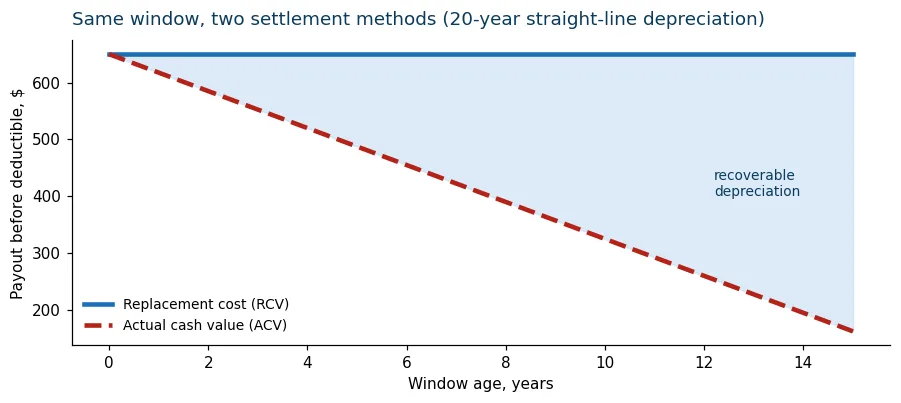
RCV pays what a comparable new window costs today, minus the deductible. Many insurers pay it in two steps: the depreciated amount first, then the rest after you actually replace the window and send the invoice. That second check is called recoverable depreciation, and state guides like Maryland's give you a fixed window of time, often two years from the loss, to claim it.
Actual cash value (ACV)
ACV subtracts depreciation first. A twelve-year-old window on a twenty-year straight-line schedule is worth 40 percent of its replacement price, which is why an ACV settlement on an old window can be smaller than the deductible. Older-home HO-8 forms settle this way by default.
Filing the claim in the right order
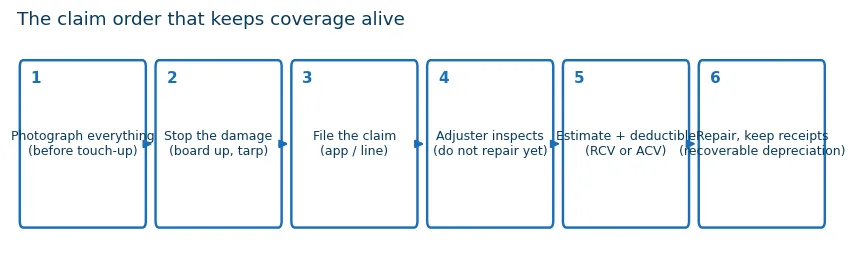
The order matters more than the wording. State consumer guides and the policy's own duties clause describe the same sequence, and breaking it is how valid claims get denied.
Document before you touch anything
Photos and video of the damage as found: the pane, the frame, the room, the weather outside. Arizona's insurance department warns that cleaning up before the insurer can evaluate the damage can get the claim denied. Shoot first, sweep later.
Then stop the damage
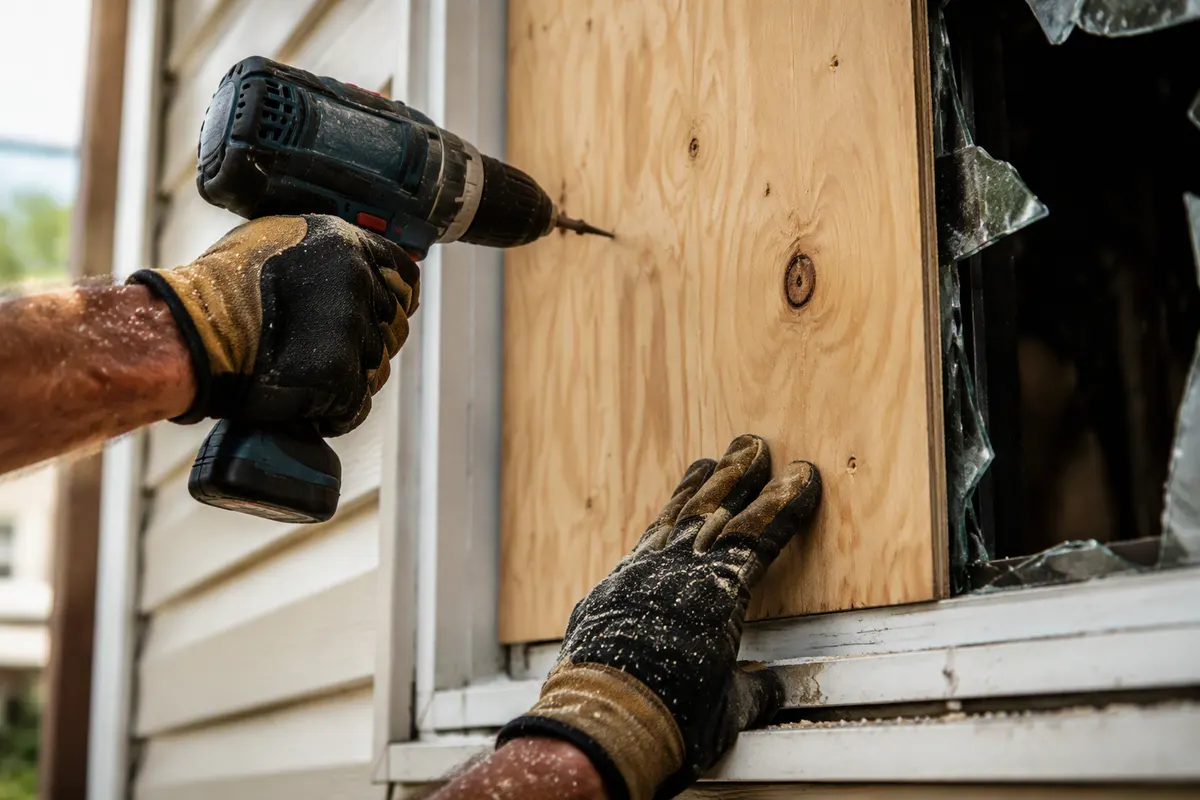
Every form carries a duty to mitigate: board up the opening, tarp what needs tarping, keep the receipts. Temporary repairs are expected and reimbursable; permanent repairs before the adjuster visits are the mistake. The same Arizona guidance tells you to ask the insurer what documentation they accept for emergency work.
File, then let the adjuster see it
File through the app or claims line with your photos attached, and have the cause ready in one sentence: when it happened and what did it. If a crime was involved, the police report number goes in the claim. Keep every receipt from the board-up to the final glazing invoice; on RCV policies the paperwork is what unlocks the second check.
If the claim is denied
Get the policy language, in writing
State Farm's claims page commits to it in public: if coverage does not apply, they send a written letter with the specific policy language behind the denial. Whatever your insurer, that letter is the document to argue with, not the phone summary. Read the cited exclusion and check whether it actually describes your facts.
Answer the exclusion, not the adjuster
A denial citing wear and tear on a window that was intact before last Tuesday's hailstorm is answerable with dated photos and a contractor's statement. A denial that is right on the facts, a seal that fogged for years, is not. Pick the fights the form supports.
Escalation paths that exist
Every state has a department of insurance that takes consumer complaints, and a complaint file gets the claim a second read. On larger losses a licensed public adjuster works for you, not the carrier, typically for a percentage of the settlement. Both routes are slower than the appeal and both are real.
Special cases worth their own answers
Fogged or failed seals
Not a claim, a warranty call. The fog between panes is a seal defect, and the manufacturer's warranty, often 10 to 20 years on the glass unit, is the instrument that pays. Insurance sees it as gradual deterioration and stays out.
Renters
An HO-4 renter's policy has no dwelling coverage at all: the building is the landlord's problem, and the landlord's policy handles the window. Where renters insurance does show up is your liability side if you or your household broke somebody else's window.
Condos
An HO-6 covers the unit interior, and windows sit in the grey zone between your walls-in coverage and the association's master policy. The master policy decides; read it before filing anywhere.
Vacant and under-renovation homes
Past the vacancy threshold, glass and vandalism coverage is suspended on a standard form. A vacant-home endorsement or a specialty policy is the fix, and it costs less than one denied break-in claim.
What we verified in the policy documents
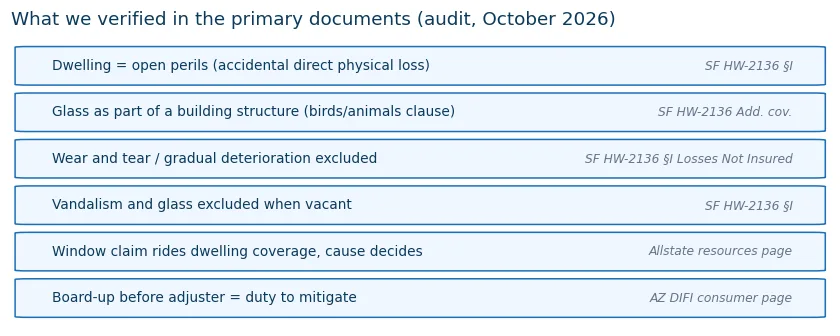
Most pages answering this question are written by companies that sell the policy. We do not sell or place insurance, so we did the other thing: pulled the actual form and read it. Everything in the table below was checked against the primary document in October 2026, not against another article about the document.
Method
We read the State Farm homeowners policy form HW-2136 (2017 edition, 40 pages), published by the Oklahoma Insurance Department, and cross-checked the coverage structure against Allstate's and Progressive's consumer pages and four state insurance department guides. Where marketing pages and the form disagreed in tone, the form won. Quotes on this page are verbatim from the form.
The three sentences that decide most claims
"We will pay for accidental direct physical loss to the property described in Coverage A, unless the loss is excluded." That is the open-perils promise. Then the carve-out: the form will not pay for loss caused by "mechanical breakdown, wear and tear, or gradual deterioration." And the vacancy rule: no vandalism or glass coverage "if the dwelling is a vacant dwelling." Cause, exclusion, vacancy. Nearly every window claim is decided inside those three sentences.
The questions people actually ask
Does homeowners insurance cover a window broken by hail or a storm?
Yes. Windstorm and hail are named perils on every standard form, and the dwelling side of an HO-3 is open-perils, so storm-broken glass is covered unless your policy excludes wind (some coastal policies do) or the damage is really old wear. What comes out of your pocket first is the deductible, and in storm states that is often 1 to 5 percent of the dwelling coverage, not a flat $500.
Will insurance pay for windows that are just old or rotted?
No. Every standard form excludes mechanical breakdown, wear and tear and gradual deterioration. A window that failed slowly, a frame that rotted, a seal that fogged over years: that is maintenance, and maintenance is the owner's job in the eyes of the policy. Insurance pays for sudden, accidental events, not for the age of the house.
Is it worth filing a claim for one broken window?
Usually not. A single window replacement runs roughly $450 to $1,400 installed, and a $500 to $1,000 deductible absorbs most of that. Add the risk of losing a claim-free discount or a surcharge at renewal, and a small claim often costs more than it pays back. The math flips when a storm takes out several windows at once or damages siding and roofing in the same event.
Does the policy cover a broken window in a vacant house?
Often no. Standard forms suspend vandalism, theft and glass breakage coverage once a dwelling sits vacant past a set window, commonly 30 to 60 days. A vacant-home endorsement or a specialty vacant-property policy is what actually keeps glass covered during a renovation, a sale gap or a probate period.
Who pays if my child breaks the neighbor's window?
That flips to the liability side. Your personal liability coverage can pay for damage your household causes to someone else's property, including a window, and no deductible applies to liability claims. Your own broken window is a dwelling question; the neighbor's window is a liability question.
What if the insurer denies the window claim?
Ask for the denial in writing with the exact policy language cited, then answer that language, not the adjuster's summary. If the cited exclusion does not actually describe your damage, you can supplement with photos and contractor statements, file a complaint with your state department of insurance, or bring in a licensed public adjuster on bigger losses. Denials grounded in wear-and-tear wording are the hardest to overturn; denials that misread the cause of damage are reversed regularly.
Sources
- State Farm Homeowners Policy, form HW-2136 (2017) · Oklahoma Insurance Department. The primary document behind the coverage table on this page.
- Allstate: Does homeowners insurance cover broken windows? · the insurer's own framing of cause-based coverage.
- Progressive: Does home insurance cover broken windows? · second insurer read, same structure.
- Louisiana Department of Insurance: Consumer's Guide to Homeowners Insurance · policy forms HO-1 through HO-6 in plain language.
- Virginia State Corporation Commission: Homeowners Insurance Guide · open-perils vs named-perils structure.
- Maryland Insurance Administration: A Consumer Guide to Homeowners Insurance · replacement cost, recoverable depreciation, anti-concurrent causation.
- Arizona Department of Insurance and Financial Institutions · document before cleanup, board-up as duty to mitigate.
- Florida Office of Insurance Regulation: Homeowners Insurance · wind deductibles in storm states.
- New Jersey DOBI: Understanding your homeowners policy · anatomy of a policy: declarations, insuring agreement, exclusions, conditions.
ClearView is an independent cost guide and does not sell or place insurance. This page is general information, not advice on your policy; the declarations page and the form govern your coverage. See the disclaimer.
Paying for it yourself?
If the damage is age, not weather, the claim route ends here and the question becomes what the work should cost. The main guide tracks per-window and whole-house prices in 2026 and shows what an honest estimate lists line by line, so the second quote is never written against your ignorance of the first one.